

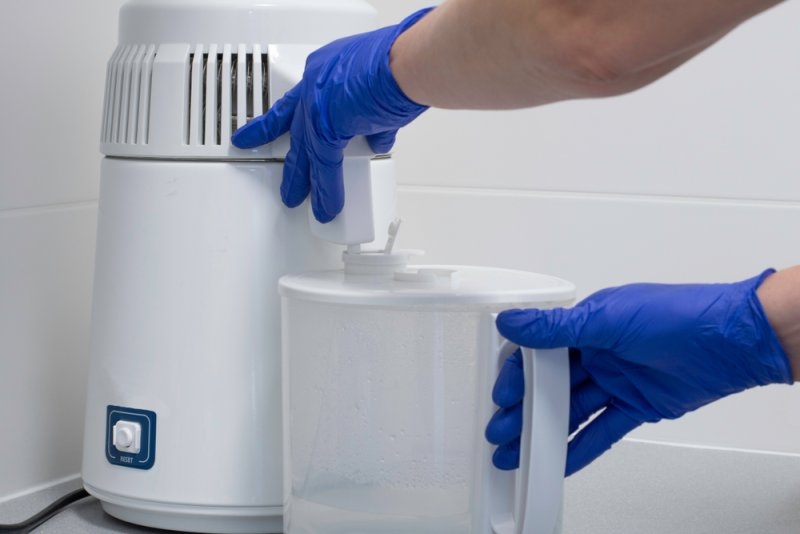
Here you'll find tips for water distiller troubleshooting to keep that clean drinking water flowing.
The more you understand about what to check initially, the easier it becomes to correct straightforward issues and identify when water distiller repair is needed.
Before you assume that a costly element has failed, do some easy troubleshooting of your distiller. Here’s what you can do:
Make sure you have your power cord is firmly in and the outlet works. If you have a newer model that features a reset button, try performing the correct procedure for this, recommended by the manufacturer, before plugging it in again.
There can either be an excess of or insufficient amounts of water in the unit. Fill only to the designated lines and use the amount as recommended by the product manufacturer’s manual.
Hard water deposits build up around the heating element and boiling chamber. Heavy scale can reduce the efficiency of heating and lead to a water distiller not functioning properly.
There are many reasons why a waterless distiller will not work. It could be a heating problem, mineral buildup, a blockage in the part, a cooling failure, etc. This is what happened after I turned the unit on.
In any case, if the distiller not producing water problem persists, watch out for the following during the cycle: Does the unit heat? Does it produce vapor? Does it stop?
The heating element has to heat the water to produce vapor. Mineral build-ups can cause inefficiency, and a broken element may not heat at all.
If the appliance remains cold during a cycle, the machine may need to be serviced. Only work on electrical components if you are qualified to do so.
Vapor needs to cool and condense before it can become distilled water. If the vents are blocked or the cooling area is dirty, this will slow down production.
Please keep access vents clear and follow the cleaning instructions supplied by the manufacturer. Do not dismantle any internal cooling components.
Sometimes a distiller may begin as normal and then shut down halfway through. This can occur if the distiller is overheating, there is a malfunctioning sensor, an electrical fault, or a blockage of the system.
If your water distiller does not finish the cycle, it is possible there is an error code showing. Note it down, and look it up in the manufacturer's manual.
Ensure there is good ventilation and make sure the appliance is positioned properly. If it becomes excessively hot, or continues to shut down, it must not be used and should be switched off until the fault can be investigated.
Components inside can become damaged through repeated overheating, and your water distiller may need repair.
Grinding, buzzing, or odd clicking sounds could point to an issue with a fan, motor, pump, or electrical part.
If abnormal noises are heard along with a burning smell, smoke, sparks, or overheating, switch the unit off and unplug it.
Mineral deposits are a common problem from distilling hard water. Scale can build up in the boiling chamber and around the element. Cleaning should be considered an important part of any distiller troubleshooting guide.
How often a unit needs cleaning will depend on the quality of the water, as well as how frequently the unit is used.
Follow the machine's suggested cleaning or descaling technique. Various models could have other cleaning solutions. Rinse the chamber out completely after cleaning before using the appliance again.
Replace the carbon filter on your model as needed. Old filters can affect taste and filtration efficiency.
Some problems are fixable with routine maintenance and filter changes, but a few problems will need a technician to come out and fix your water distiller. If a fault is found in the wiring or heating elements, sensors, or the control board, among other internal electrical parts, you may need a water distiller repair.
Turn off the machine immediately if you see any sign of smoke, sparks, smell of burning, damaged wiring, or if it is very hot. Do not remove the electrical covers to look for faults. Have any repair work done by a trained or qualified repair person.
A straightforward troubleshooting method like this can save you a lot of time, money, and inconvenience. First, examine the power, water level, collection container, any connections within reach, and the vents that are visible.
Is it making a poor-quality end product? Mineral buildup? Filter clogged? If cleaning of machinery is not helping, or if encountering electrical faults, heating faults, or repeated overheating, then it is recommended to call in a professional.
Prevention is the best way to minimize the chance of water distiller repair. Regular cleaning of the unit, emptying of the filters, as advised, and limiting over-filling or under-filling of the chamber can go a long way in helping to keep your water distiller working efficiently.
Ensure vents are unobstructed and that areas are well ventilated. Water distiller maintenance can also help you identify issues sooner if you keep track of changes in operation.
Most distiller troubleshooting problems have a logical starting point. Power, mineral accumulation, blockages, filters, worn seals...anything you can think of can make performance go down. If you follow a standard water distiller troubleshooting checklist, you'll be able to troubleshoot simple maintenance problems without risking your safety.
Looking for a water distiller not working, a distiller not making water, or strange noises? Don't try to repair it yourself unless you're trained to do so. Maintaining and quickly repairing your water distiller can ensure its reliable operation.
The frequency at which you will need to clean depends on how much water you use daily and how hard the water is. Keep an eye out for the appearance of scale. If scale builds up and impedes productivity, the cleaner will need to be used more often. Clean your appliance and descale as advised by the manufacturer.
Most household water distillers are set up for hard tap water to be used, but double-check this by reading your user guide. The hardest waters tend to see build-up a little more regularly.
This can sometimes occur due to build-up on internal components, dirty collection containers, or aged filters. Clean the appliance down and, if appropriate, replace the filters. If tastes don’t get any better, contact the supplier.
Some appliance parts are noisy, but if clicking can be heard as a new sound, it could signal issues with other electric parts or moving parts. In severe cases, a lot of this clicking may even lead to overheating.
Simple cleans or replacing water filters (where recommended by the supplier) can typically be undertaken as home maintenance, but any mechanical or electrical work on moving or internal parts requires the intervention of a professional.
This content was created by AI