

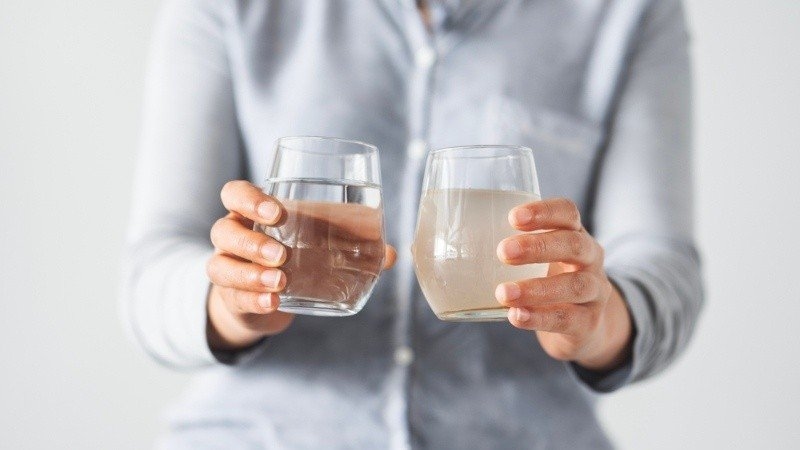
Water plays an important role in the day-to-day enjoyment of life, and yet not all water is made the same. If you are choosing the right water purification device for your home, you need to distinguish between the most commonly confused water purifiers: distilled water and filtered water.
Let’s take a look at what each water purifying method involves, what advantages and disadvantages each has, and which is better for day-to-day consumption.
When comparing distilled water vs. filtered water, you can immediately note that the difference between the two purifiers is the process used. While both make for a safe drink, the types of impurities they get rid of vary greatly, along with the process by which water is cleaned. This method removes many of the impurities found in the water.
Filtered water, on the other hand, has contaminants removed via one or more filtration stages, which can remove minerals while also leaving some of them behind. In an overall pure water comparison, no single type is superior, but the option you choose will depend upon your individual health goals, your preferences for taste, and the quality of your initial water source.
Distilled water is made through one of the oldest purification methods. Water is heated until it becomes steam, after which almost all contaminants (including bacteria, viruses, chemicals, heavy metals, impurities, and dissolved solids) remain behind. The steam is then cooled and condensed into pure water that contains almost none of the items above. Its very pure nature is one reason why this is one of the purest forms of water you can drink. It has many lab and medical uses because it has no minerals in it.
Even though the water is very pure, it contains no naturally beneficial minerals such as calcium and magnesium and is able to have an effect on how the water tastes.
Filtered water, on the other hand, is produced through one or more filtration stages that remove selected impurities from the water, depending on what the system is designed to take out, whether that be heavy metals, chemicals, or bacteria. The filtration systems include reverse osmosis and activated carbon filters, which are common ways to purify drinking water. Modern-day filtered water leaves most of the minerals from the original source in the water, which contributes to making the water taste better.
One of the reasons filtered water is a more common drinking water type is that most people enjoy drinking better-tasting, cleaner water, so it contributes to their overall daily hydration goals. Good filtered water can leave many health-promoting qualities that you want in drinking water while removing those that are harmful.
When understanding water quality comparison, the key differences between distilled and filtered water can easily be seen when compared side-by-side:
Distilled water requires a method of purification that involves boiling and steam to completely remove minerals and impurities. Filtered water works on a different principle in that it removes selected contaminants through filtration technology.
Distilled water tastes flat when no minerals are present. However, filtered water typically has a fresher, tastier taste because it maintains natural minerals.
For convenience, filtered water can be much easier to use at home, where distilled water tends to require much more energy to purify and tends to be slower than most filtration systems.
Ultimately, for most purified water uses, either option provides a great quality of water, but they differ significantly in their end product.
Distilled water offers high levels of purity, which can be ideal when drinking from a water source of low quality. In a purified water comparison, this highly pure form of drinking water may offer benefits for those who drink it because bacteria, viruses, or heavy metals from the original source are removed.
In a purified water comparison, it can also be a health-promoting water for those who need it for specific medical reasons. Due to the consistent purity that is achieved through distilled water, it makes a great, consistent form of drinking water to consume daily.
The primary health benefits that you get from drinking filtered water are the removal of contaminants that might be harmful to the body, such as pesticides, chlorine, and heavy metals, while leaving healthy natural minerals like magnesium and calcium in the water, which also contribute to better-tasting water.
Improved-tasting water is one of the many benefits that consumers associate with filtered water, as people are more encouraged to drink it and consume proper amounts of hydration when it tastes great. Filtered water typically offers good health benefits, especially if maintained correctly, which would be useful for a wide number of consumers.
Distilled water has some disadvantages. It tastes flat or not quite right because of the absence of all minerals, and it will not benefit the body with those minerals like distilled water. Distilled water is also very costly due to the amount of energy required to produce it.
With modern filtration systems that produce clean filtered water in a matter of moments, purified water has now reached a higher level of accessibility than ever before for many consumers. Some individuals feel it is necessary to keep minerals present in water for good health, even when other sources of nutrition exist.
Filtered water does not always remove all the beneficial minerals, which some individuals prefer for the benefits they offer. All filters work differently to remove varying amounts of contaminants, so while filtered water may be able to remove chlorine and chemicals, it can only remove limited quantities of heavy metals and microorganisms.
However, good filtered water would provide a better range of contaminants removed than distilled water. All filtered water requires maintenance in the form of filters needing to be replaced on a regular basis to continue functioning well.
The decision between distilled water and filtered water should be a straightforward one. Filtered water does a better job of cleaning water and removing impurities while keeping most of the beneficial minerals present. Distilled water purifies water of practically everything, yielding the greatest quality.
By knowing these two differences with a water purification guide, you should make a better choice and experience the great, clean water benefits.
Distilled water can be used to make coffee and tea; however, it may affect taste due to the lack of minerals. Many coffee and tea lovers recommend filtered water, as the minerals in the water can enhance the natural taste and scent of coffee and tea. It varies based on the person's taste.
The replacement frequency will vary for different brands and types of filters. Most domestic filters require changing every two to six months. A water filter not being replaced will mean less effectiveness from the system. Instructions from the manufacturer will usually specify when to change.
As long as it is kept in a sealed container, it will not go off. However, once it is exposed to the air, it is possible for contamination to enter the water. When distilled water is kept away from heat, light, and pollutants, it can stay fresh for extended periods of time. Ensure the water quality before drinking if it has been in storage.
Filtered water is commonly accepted as being more environmentally friendly, as most domestic filtration systems create less waste and use less electricity than distillation methods. Replacing filters as recommended will also ensure you rely less on bottled water.
This content was created by AI